Did the Church Give Us the Bible?
Published on: October 25, 2025
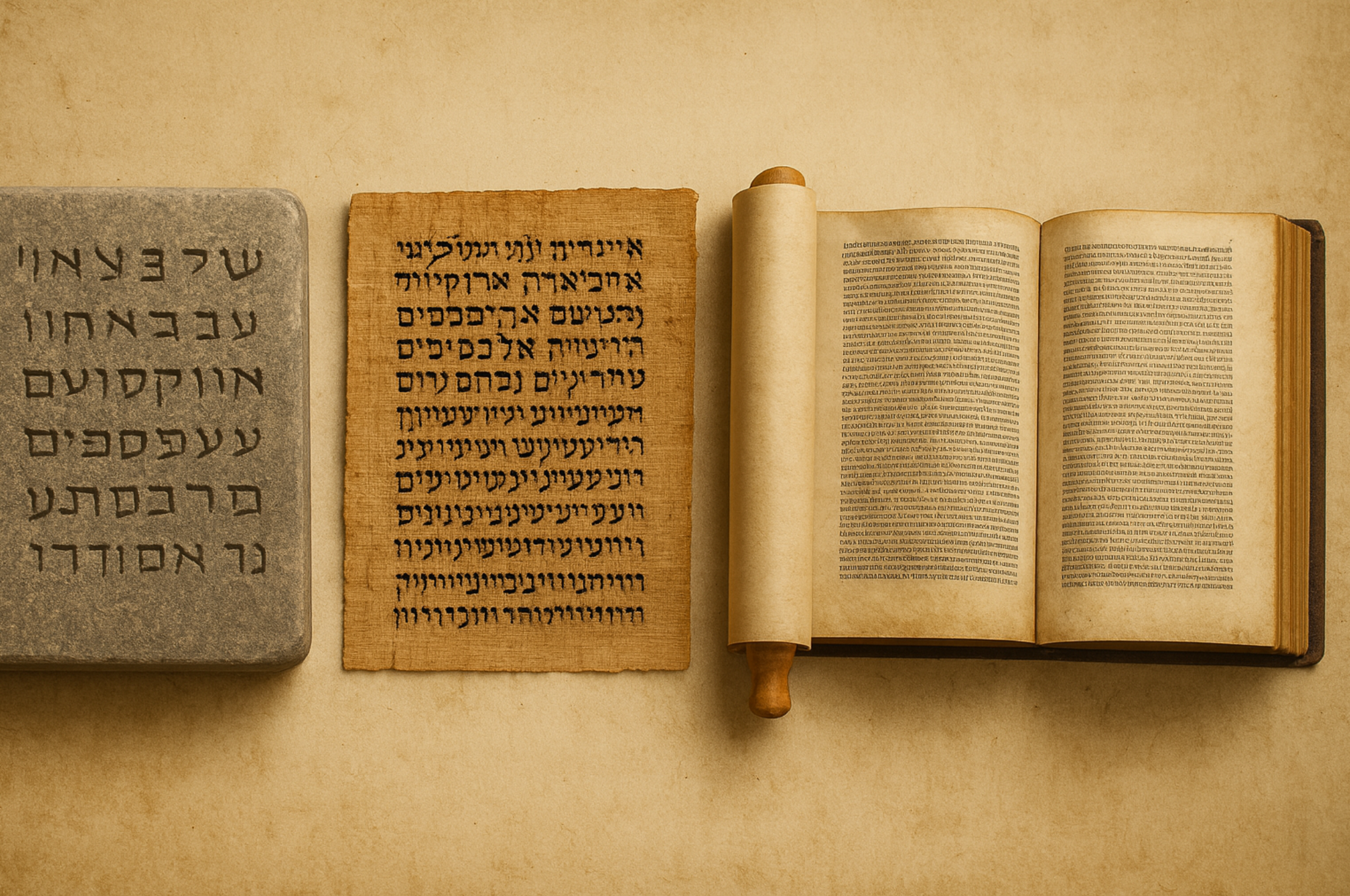
The Church or God
Overview
A common challenge from non-Protestants to Protestants is that without the authority of the Church, the Bible could not be identified or recognized as Scripture. The argument goes that since the early Church recognized and compiled the biblical canon, Protestants are inconsistent in claiming an infallible collection of books determined by a fallible process.
However, the Protestant response clarifies that the Church did not create or confer authority on Scripture it merely recognized what was already divinely inspired.
Key Arguments
1. Origin of Scripture
- God is the origin of Scripture, not the Church.
- Scripture is the sole infallible rule of faith and practice because its source is divine.
- Even Vatican I acknowledges that the Church holds the books sacred not because of its approval, but because they were written under divine inspiration and have God as their author.
“The Church no more gave us the New Testament canon than Sir Isaac Newton gave us the force of gravity.”
— J.I. Packer
2. Recognition vs. Creation
- The early Church did not invent the Bible; it merely recognized books already inspired by God.
- By the time canon discussions began, the inspired writings were already being read, copied, circulated, and quoted as Scripture.
- Peter recognized Paul’s writings as Scripture (2 Peter 3:16).
- Paul quoted Luke alongside Deuteronomy as Scripture (1 Timothy 5:18).
3. The Canon and Historical Context
- The early Church had a Bible — the Old Testament.
- The later codices (e.g., Codex Sinaiticus, Alexandrinus, Vaticanus) were collections that included both canonical and noncanonical works.
- Inclusion of a book in an early codex does not automatically imply scriptural status.
- Examples of noncanonical works found in codices include:
- 4 Maccabees
- The Shepherd of Hermas
- The Epistle of Barnabas
- 1 & 2 Clement
- Examples of noncanonical works found in codices include:
4. The Church’s Role
- The Church’s role in canonization is ministerial, not magisterial.
- The Church is a witness to Scripture, not its source.
- Analogy: Saying “the Church gave us the Bible” is like saying “the postal service gave you your mail.”
The mail existed before the carrier delivered it.
“The Bible made the Church the Church didn’t make the Bible.”
5. Scripture’s Self-Authenticating Authority
- Scripture is self-authenticating and recognized as divine by the Spirit’s guidance.
- The Holy Spirit led the Church to recognize the correct books not by infallibility, but by divine providence.
- Even Roman Catholicism lacks an infallible list of infallible traditions; thus, infallibility isn’t required for truth recognition.
6. Canon Disagreements
- Differences among Protestant, Catholic, Orthodox, and Ethiopian canons reflect early discussions, not contradictions.
- All share the core 66 books recognized by Protestants.
- The Protestant canon (66 books) is accepted not by convenience or tradition, but by convictional confidence in the Spirit’s guidance and historical reason.
7. Scripture’s Supreme Authority
- Scripture is the “norm that norms all norms.”
- Tradition, experience, and reason all have a voice, but Scripture has the veto.
- The Bereans (Acts 17:11) are commended for testing teachings by Scripture the true and final authority.
8. Theological Foundation
- The Church is built upon the foundation of the apostles and prophets, with Christ as the cornerstone (Ephesians 2:20).
- Even Cyril of Jerusalem (4th century) affirmed that no doctrine should be accepted without Scriptural proof.
“Not even a casual statement must be delivered without the Holy Scriptures… even to me who tell you these things.”
— Cyril of Jerusalem
Conclusion
The Bible precedes and grounds the authority of the Church, not the other way around.
The Church’s recognition of the canon was an act of obedience and discernment, not creation or invention.
Therefore, Protestants affirm that Scripture alone (Sola Scriptura) stands as the infallible rule of faith and practice, while tradition and reason serve as valuable but subordinate aids.
References
- YouTube Video: Did the Church Give Us the Bible? — Wes Huff
- Scriptural References:
- 2 Peter 3:16
- 1 Timothy 5:18
- 2 Timothy 3:16
- Acts 17:11
- Matthew 16:18
- Ephesians 2:20
- Historical References:
- Vatican I, Dei Filius (1870)
- J.I. Packer, God Has Spoken
- Cyril of Jerusalem, Catechetical Lectures